
Regenerative braking uses the electric motor to slow the car when you lift off the accelerator or press the brake, turning some of that motion back into battery charge. How strong it feels differs by car and by setting. The brakes are still there for stopping, so feel how a car behaves on a test drive.
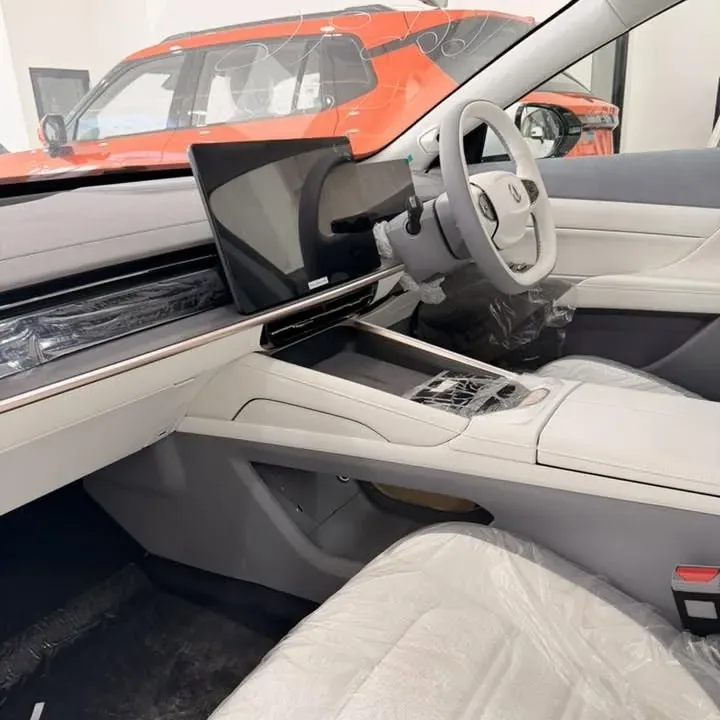
What does regenerative braking do?
When you slow down in a petrol car, the brakes turn the car's motion into heat and it is lost. In an EV, the electric motor can run in reverse as a generator while the car slows, and send part of that energy back to the battery. The car slows down because the motor is doing some of the work.
Does it change how you drive?
Usually a little. When you lift your foot off the accelerator, an EV can slow down more firmly than a petrol car does, so many drivers find they use the brake pedal less in slow traffic. Some cars let you choose how strong this feels. We do not list the settings of each model in this guide, so ask us to show you how the car you are driving behaves.
Does it add a lot of range?
It can recover some energy, most noticeably in stop-and-go traffic, but how much depends on your speed, the road, traffic and how you drive. We make no range claim for it. For the range figures on our model pages, see the Vigo and 007 pages, where they are labelled CLTC.
Do you still need the brake pedal?
Yes. Regenerative braking helps to slow the car, but the brake pedal is what you use to stop firmly and in an emergency. In many EVs the regeneration can feel different when the battery is very full or the road is wet, so brake smoothly and leave extra distance in the rain. Try these on a test drive:
What about brake wear and servicing?
Because the motor does part of the slowing, the brake pads may be used less often than in a petrol car. The brakes still need to be inspected, and parts can still age. Our service interval is every 10,000 km, and our service team can tell you what is checked at each visit.
- Lift off the accelerator at low speed in a safe place and note how firmly the car slows
- Ask which regeneration settings the car offers and how to change them
- Stop smoothly with the brake pedal and see how it feels as the car comes to rest
- Drive a short stop-and-go stretch to see whether you prefer the feel
- Ask how the car behaves in the rain, and when the battery is very full
Book a Dongfeng test drive in Johor Bahru →
Questions
Is regenerative braking the same as one-pedal driving?
Not exactly. Regenerative braking is the motor slowing the car and recharging the battery. One-pedal driving is a setting in some cars where lifting off the accelerator slows the car strongly. Ask us which options the car you drive has.
Does regenerative braking charge the battery fully?
No. It recovers a small part of the energy while you slow down. You still charge the car at home or at a charger.
Will the brake lights come on when the car slows by itself?
This depends on the car. We do not state it for each model here, so ask us to explain it on a test drive.
Where can I feel it before I decide?
On a test drive. WhatsApp us the model and a time that suits you, and we will have the car charged and ready.